 Rolex
RolexRolex Replica Movement Guide
Home » Rolex Replica Movement Guide
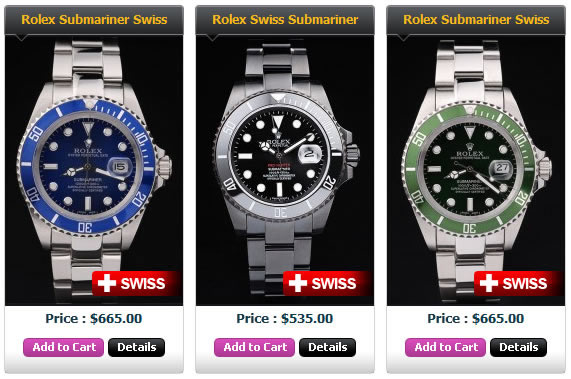
Movement labels are the least reliable shorthand in the replica-watch market. “Swiss”, “ETA”, “Miyota”, “3135”, “3235”, “3285” and “4131” can describe genuinely different mechanical architectures—or be used loosely in marketing. A useful movement comparison therefore starts with function and serviceability, then considers visual similarity. The goal is to understand what you are buying rather than to rank every movement on a single “best” scale.
Five questions to ask before comparing movements
Before looking at bridge decoration or rotor engraving, establish the basics. The exact answers will tell you more than “Swiss quality”.
- What is the exact calibre or movement family installed?
- Which functions are active: date, GMT, chronograph, day/date, quick-set hour?
- What power reserve is actually expected or measured?
- Can the movement be serviced locally and are parts available?
- If repair is uneconomic, can the complete movement be replaced?
Miyota automatic movements
Miyota is a Japanese movement manufacturer, not a Swiss brand. Its automatic calibres are used widely because of availability, durability and the fact that many watchmakers recognise them. In replica watches, Miyota-based solutions are often chosen when practical ownership is more important than copying genuine Rolex architecture internally.
The compromises vary by calibre and case design. Crown position may differ, rotor sound may be more noticeable, hand-setting direction can differ and date-wheel adaptations may be required. None of those factors automatically makes a Miyota bad; they simply mean that “reliable generic movement” and “reference-correct clone movement” are different goals.
ETA and ETA-style movements are not the same thing
ETA is a Swiss movement manufacturer. A genuine ETA calibre has a specific origin and specification. An “ETA clone” or “ETA-style” movement is produced elsewhere but follows some dimensions or architecture associated with an ETA design. Product listings often blur those categories.
If a seller claims “Swiss ETA”, ask for the exact calibre and evidence that supports the origin claim. If the answer is vague, treat the movement as unverified rather than assuming the most expensive interpretation of the words.
3135-style clone movements
Rolex calibre 3135 powered many earlier date-equipped Rolex models and became a major target for replica movement development. A 3135-style clone can improve crown position, hand-setting behaviour, date function and internal appearance compared with a generic movement adapted to the same case.
Quality can vary between manufacturers and production batches. Parts interchangeability should not be assumed. Some components may resemble genuine architecture visually while using different tolerances or materials. Ask whether the seller recommends repair or complete movement replacement if a fault develops.
3230 and 3235-style clones
Current genuine Submariner 124060 uses calibre 3230, while current Submariner Date and Datejust families use calibre 3235. Genuine versions are associated with approximately 70 hours of power reserve. Replica “3230/3235” movements can target similar crown, date and visual architecture, but the label does not guarantee genuine-like reserve or component compatibility.
On a no-date 124060-style watch, ask whether the movement has a ghost-date crown position. On a 126610 or Datejust-style watch, inspect quick-set date action and whether the date changes cleanly around midnight. Functional details are more informative than a movement sticker or engraving.
3285-style GMT movements
The genuine GMT-Master II calibre 3285 provides a 24-hour display, independent rapid-setting local-hour hand and approximately 70 hours of reserve. Replica GMT movements can reproduce this function in different ways. Some are “traveller GMT” style with an independently adjustable local hour; others adjust the 24-hour hand instead.
Neither approach is useless, but the setting logic affects how the watch works during travel. Ask for a video showing crown positions, local-hour adjustment and date change. A four-hand dial alone does not prove genuine-like GMT function.
4131-style and other Daytona chronograph movements
The current genuine Daytona 126500LN uses calibre 4131 and approximately 72 hours of power reserve. Replica chronograph movements are particularly important because architecture influences sub-dial position and case thickness. Some alternatives provide dependable chronograph operation but cannot place registers exactly like the genuine movement; clone-style solutions may improve layout at the cost of complexity.
For any Daytona movement, test start, stop and reset. Confirm which sub-dials are functional, check zero alignment and ask about service options. Chronograph ownership is mechanically more demanding than a simple three-hand automatic.
Day-Date movement complexity
Day-Date-style watches add a fully spelled day wheel to the normal date system. The genuine current Day-Date 40 uses calibre 3255. Replica solutions may use modified generic movements or more reference-specific constructions. The calendar mechanism means there are more wheels, jumpers and setting components that can require attention.
Ask for video showing both day and date quick-set functions and a clean change cycle. If the watch uses a language wheel, confirm the installed language before shipping.
Power reserve: measure the watch you are buying
Power reserve is one of the easiest specifications to copy from a genuine model into a replica listing, but it should be measured on the actual movement. Fully wind the watch, note the time and let it run untouched until it stops. A seller may not perform a complete test, but an honest estimate is more useful than automatically claiming 70 or 72 hours.
Also remember that power reserve and timekeeping are separate. A movement can run for a long time while keeping poor time, or keep excellent time with a shorter reserve.
Timegrapher data: useful but easy to over-interpret
A timegrapher can show rate, amplitude and beat error in a specific position at a specific state of wind. This helps detect obvious regulation or mechanical issues. It does not prove long-term reliability and does not capture performance in every wrist position.
Use timegrapher readings alongside real functional checks: smooth winding, stable crown positions, clean hand setting, correct date/GMT/chronograph operation and several hours of normal running.
Rotor noise and winding feel
Some movement families are naturally more audible than others. A noisy rotor does not automatically mean failure, but scraping, intermittent contact or a rotor that visibly catches deserves investigation. Winding should feel consistent rather than gritty or suddenly free-spinning.
Video with audio can be useful, though phone microphones exaggerate sound. Compare behaviour rather than trying to judge exact loudness from one recording.
Serviceability is part of movement quality
A movement that is beautiful and reference-correct but impossible to service locally may be a poor choice for someone planning daily wear. Conversely, a common generic movement can be practical because a watchmaker can source parts or replace it completely.
Ask sellers what they do after warranty. Do they repair? Replace the movement? Provide parts? Require international return shipping? The answer should influence how much extra you are willing to pay for mechanical complexity.
Movement choice by model
- Explorer / no-date Submariner: simple no-date reliability can be a strong priority; check for ghost-date positions if they matter to you.
- Submariner Date / Datejust: date alignment and crown/date behaviour become important.
- GMT-Master II: decide whether traveller-GMT local-hour adjustment matters.
- Day-Date: day and date setting adds complexity and service considerations.
- Daytona: movement architecture affects sub-dial spacing and case thickness as well as chronograph reliability.
The most useful movement decision rule
Choose the movement whose compromises match your ownership plan. If the case back stays closed and you want a dependable daily watch, serviceability may deserve the highest weight. If functional and internal similarity are central to the hobby for you, a clone movement may justify the added complexity.
The mistake is assuming one movement label automatically guarantees every category—accuracy, reserve, durability, visual similarity and repairability—at the same time.
Frequently Asked Questions
Is Miyota a Swiss movement?
No. Miyota is a Japanese manufacturer.
Does “Swiss ETA” always mean a genuine ETA movement?
No. Replica listings may use ETA terminology loosely, so the exact calibre and origin should be verified.
Is a clone movement always more accurate than a generic movement?
No. Clone usually refers to architecture or appearance, not guaranteed timekeeping accuracy.
What is a ghost-date position?
It is an unused crown position for date setting in a watch that has no date display, usually because a date-capable movement was used.
What should I prioritise for a daily-wear replica?
Reliable function, serviceability, parts or replacement availability and stable exterior construction are usually more practical than hidden movement decoration.
Continue Your Research
A strong comparison works best when model, size, movement and seller evidence are checked together. Use the related guides below rather than treating a single marketing label as proof of quality.
Rolex Collections
Reference Guides
Buyer Resources
Replica watches are not genuine Rolex products. Model and trademark names are used only for identification and comparison. This site is independent and is not affiliated with Rolex SA.