 Rolex
RolexRolex Submariner Replica Quality and Movement Guide
Home » Rolex Collections » Submariner » Rolex Submariner Replica Quality and Movement Guide
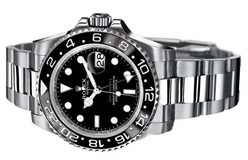
“Swiss Grade 1”, “AAA+”, “super clone” and “1:1” are marketing labels, not recognised engineering grades. Two sellers can use the same phrase for watches with very different cases, dials, bracelets and movements. This page replaces those broad quality labels with a practical framework for judging a Submariner-style replica by evidence.
Start with the exact reference, because quality is reference-specific
A watch can be well made yet still be a poor 126610LN if its case shape, bracelet width or date presentation belongs to an older 116610-style construction. The first quality check is therefore not polishing; it is whether the watch is trying to reproduce the correct generation. Confirm the reference number, nominal size, dial/date configuration and bezel colour before judging finer details.
For current-style Submariners, the main branches on this site are 124060, 126610LN and 126610LV. The genuine 41 mm generation provides a useful proportion benchmark, while replica specifications must be verified independently.
Case quality is about geometry as much as finishing
High polish and sharp brushing can make a watch look impressive in macro photography, but incorrect geometry remains incorrect. Check lug taper, crown guards, the height of the mid-case, the distance between bezel and case flank, crown size and the relationship between case and end links. Side-profile photographs are essential because sellers often concentrate on the dial where the watch looks strongest.
Also check transitions between brushed and polished surfaces. On a higher-quality case these boundaries should look deliberate rather than wavy or over-rounded. Excessive polishing can soften edges and make even a correctly sized case appear wrong.
Dial quality: alignment first, typography second
Start by checking whether the hour markers form a clean geometric pattern around the dial. Compare the 12, 3, 6 and 9 positions, then look at smaller markers. Next compare minute-track alignment, coronet position and the spacing of text blocks. A dial with attractive printing can still look poor if it is rotated slightly within the case.
On date models, the date wheel is part of the dial presentation. Check several dates, not just the number shown in a seller’s still photograph. Cyclops position, magnification and date-wheel centring should be considered together.
Bezel quality combines insert, engraving and mechanism
A ceramic-style insert needs correct colour and gloss, but those are only two variables. Inspect the depth and cleanliness of numeral engraving, fill colour, pearl shape, pearl seating and alignment. Then assess the mechanical bezel: click consistency, back-play and whether the triangle returns accurately to 12.
Green 126610LV-style inserts deserve neutral-light photographs because saturated studio lighting can make colour evaluation unreliable. Black inserts are easier to judge for colour but more unforgiving of dust, printing or alignment defects.
Bracelet quality affects ownership every day
Bracelet construction is often the difference between a watch that only looks convincing in photographs and one that feels convincing on the wrist. Look for clean end-link fit, even brushing, consistent screw or pin finishing, controlled side play and a clasp that closes securely. The Glidelock-style mechanism should adjust smoothly without feeling loose after it locks.
Ask whether spare links and clasp parts are available. A bracelet problem is common enough that replacement options can matter more than a tiny difference in dial font.
What movement labels actually tell you
A “Swiss ETA” claim should be separated from “ETA-style”. Genuine Swiss ETA movements, Asian clones of ETA architecture and movements merely described with ETA terminology are not the same product. Likewise, “3135 clone” and “3235 clone” cover more than one construction and quality level in the replica market.
The useful questions are concrete: What exact calibre is installed? Does the crown set in the expected direction? Is there a ghost date position on a no-date model? What is the measured power reserve? Can a watchmaker obtain parts? Can the complete movement be replaced if repair is uneconomic? The movement guide goes deeper into these trade-offs.
Timegrapher numbers need context
A timegrapher measures mechanical behaviour at a moment in time and in a particular position. Rate, amplitude and beat error can help identify obvious problems, but one attractive screenshot does not guarantee long-term reliability. Results can also change with mainspring state and positional orientation.
Use timegrapher evidence as one part of QC. Listen for rotor noise, confirm smooth winding, test hand setting, observe date change if applicable and ask about the seller’s policy if a movement arrives with a fault.
Do not use water resistance as a quality shortcut
A seller may advertise a watch as 30 m, 50 m or 100 m water resistant, but those labels do not tell you whether your individual watch was pressure-tested after assembly. Crown-tube fit, gaskets, crystal installation and case-back sealing all matter. The safest practice is to avoid water exposure until an independent pressure test has been performed.
A convincing Submariner replica does not need to imitate the genuine 300 m dive rating to be useful as an everyday watch; it needs an honest, tested level of sealing appropriate to how you plan to wear it.
A better definition of “high quality”
A high-quality replica is one whose compromises are understood and consistent with the buyer’s priorities. For one buyer that may mean a visually accurate clone movement and close reference geometry. For another it may mean a robust serviceable movement, strong bracelet and good exterior finishing even if the internal architecture is less authentic-looking.
This is why a single grade cannot rank every watch objectively. Quality should be described across categories—case, dial, bezel, bracelet, movement, functions, water-resistance testing and after-sales support—rather than compressed into “AAA” or “1:1”.
QC checklist before approving a Submariner-style watch
- Correct reference and generation confirmed.
- Case and crown-guard shape checked from front and side.
- Bezel triangle, pearl and dial 12 marker aligned.
- Dial markers, printing and rehaut relationship inspected.
- Date/Cyclops checked on multiple dates where applicable.
- Bracelet end links, clasp and adjustment mechanism inspected.
- Movement calibre and functions demonstrated.
- Return/warranty process understood before payment.
- Independent pressure test planned if the watch will be exposed to water.
Frequently Asked Questions
Is “Swiss Grade 1” an official quality standard?
No. It is a marketing phrase with no universal technical definition.
Is a genuine ETA movement always the best choice for a Submariner replica?
Not necessarily. It can be serviceable and reliable, but a clone movement may offer more reference-correct crown position or date behaviour. The trade-off depends on priorities.
What should be checked before approving QC?
Reference geometry, bezel alignment, dial/rehaut alignment, date and Cyclops where present, bracelet fit, movement functions and seller support.
Can timegrapher results prove a movement is high quality?
They can identify some running characteristics at one moment, but they do not prove long-term reliability or overall watch quality.
Continue Your Research
A strong comparison works best when model, size, movement and seller evidence are checked together. Use the related guides below rather than treating a single marketing label as proof of quality.
Rolex Collections
Reference Guides
Buyer Resources
Replica watches are not genuine Rolex products. Model and trademark names are used only for identification and comparison. This site is independent and is not affiliated with Rolex SA.